
PCI Contributes to Record-Breaking Salmon Recovery on Mendocino Coast
We're excited to share recent news from NOAA Fisheries highlighting the remarkable success of habitat restoration efforts on California's Mendocino Coast - work that PCI is proud to have contributed to.
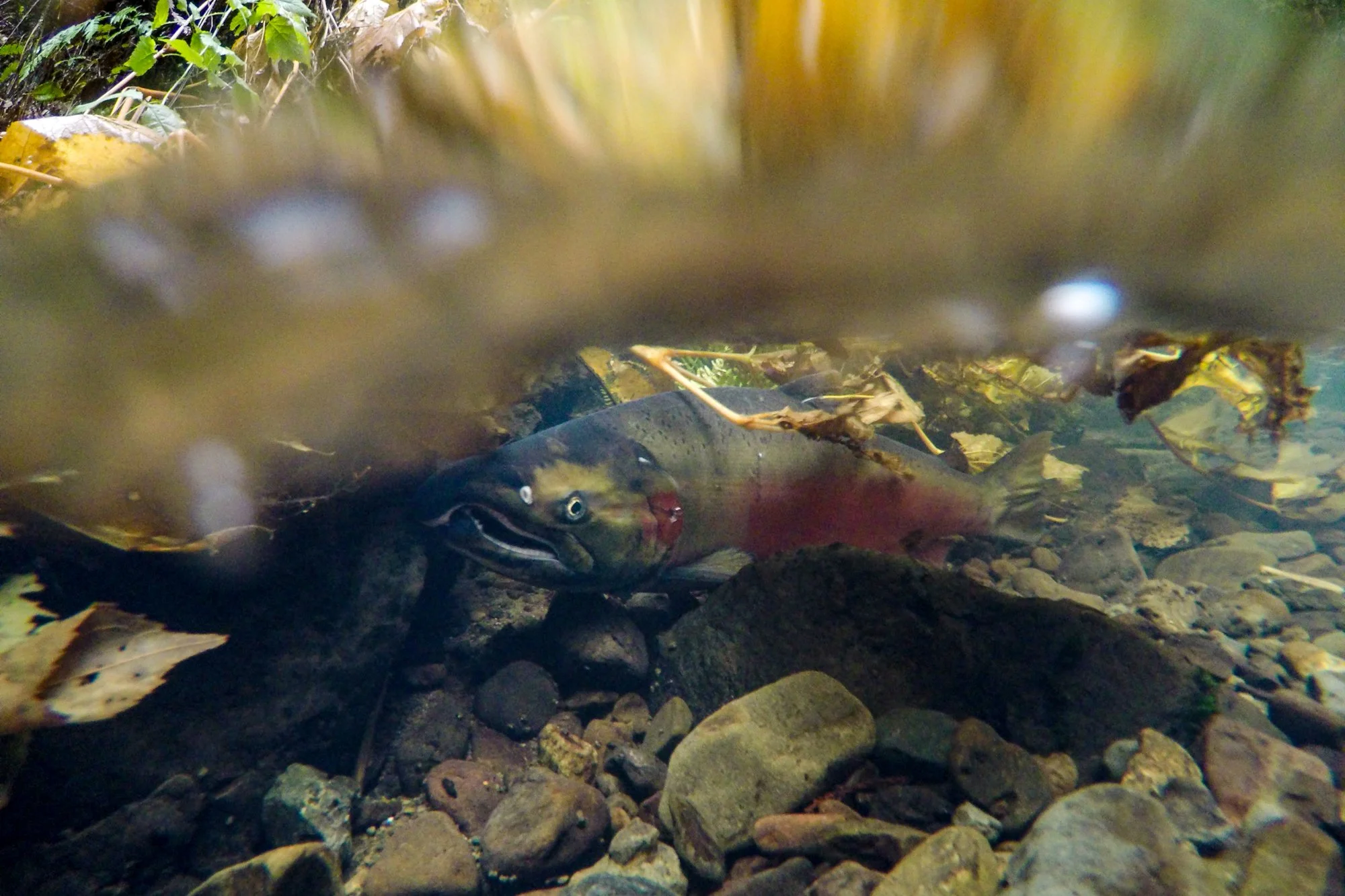
Photo Credit: CDFW
Record-Breaking Returns for Endangered Salmon
Last winter marked a historic milestone with over 15,000 adult CCC coho returning to spawn - the highest numbers since monitoring began 16 years ago. The Ten Mile and Noyo rivers exceeded recovery targets set by NOAA for potential delisting under the Endangered Species Act.
This success reflects decades of dedicated restoration work. Since the species was listed as endangered in 1996, NOAA has invested over $82 million in restoration and monitoring of CCC coho salmon in Mendocino rivers.
PCI's ecosystem restoration team has been a valued partner in this effort, applying our expertise in habitat assessment, restoration design, and implementation.
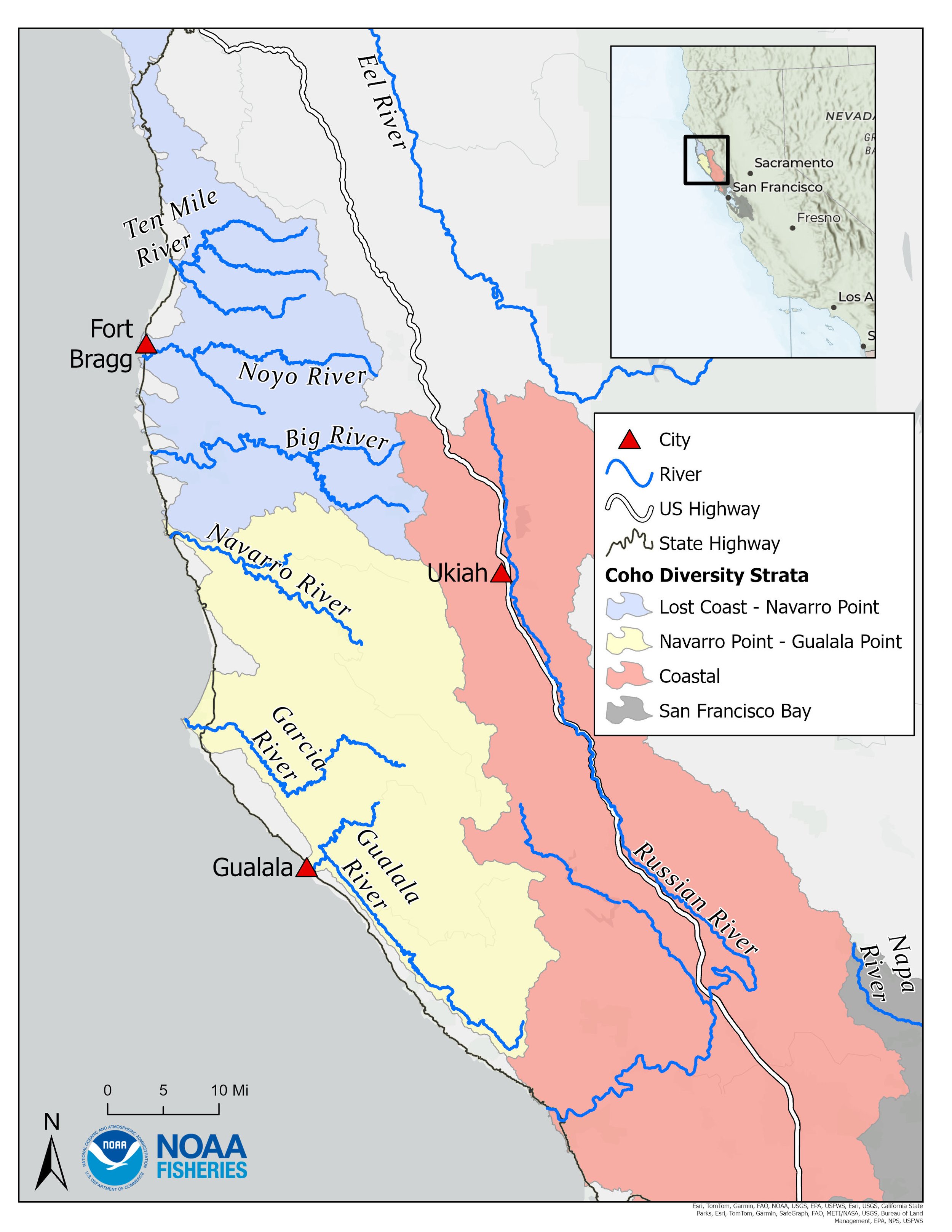
Map showing the major watersheds for CCC coho salmon. The Mendocino Coast includes the Lost Coast (in blue) and Navarro Point (in yellow) diversity stratas. Credit: NOAA
POSITIVE Restoration Outcomes
The restoration strategy has focused on addressing habitat degradation caused by historic logging and development. Key elements include:
Creating winter habitat for juvenile salmon
Improving stream complexity with engineered log jams
Reconnecting floodplains to provide refuge during high flows
Removing barriers to fish migration
NOAA partners report that salmon using the restored habitats are showing improved health and size compared to others in the watershed. Some salmon are now returning to streams where they had been absent for 70 years - a powerful testament to the effectiveness of these restoration efforts.
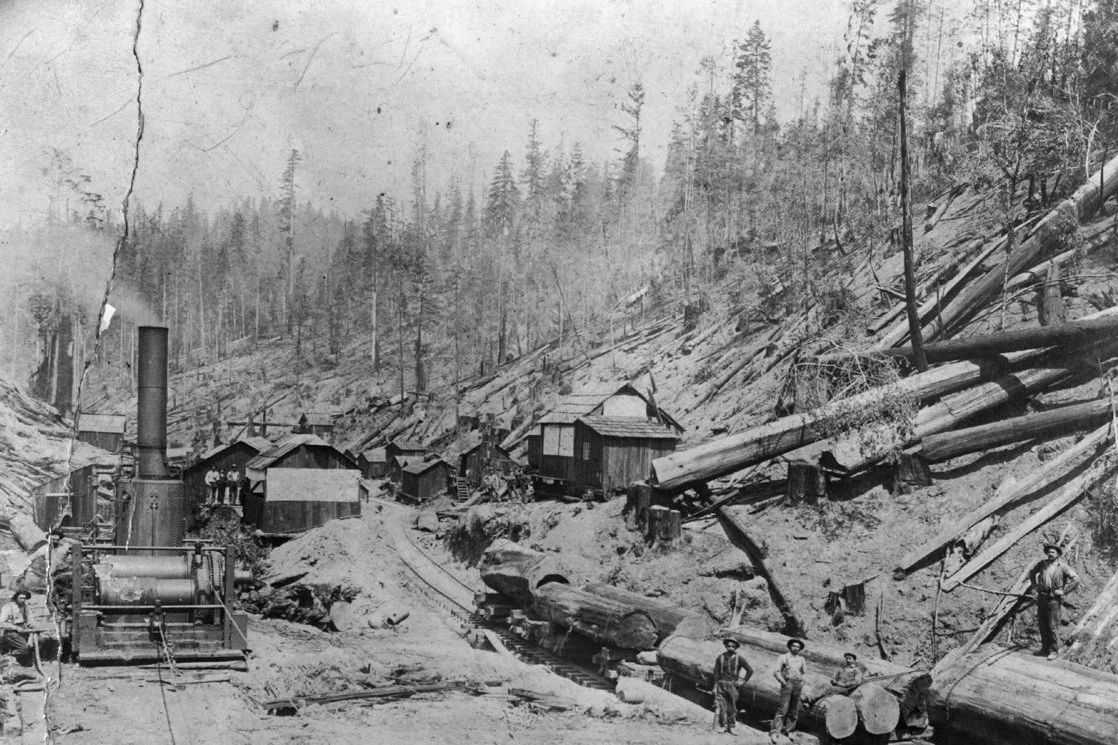
Railroad landing and logging camp on the Ten Mile River in the late 1800s. Historic logging activities substantially altered salmon habitat throughout Mendocino County. Credit: Held-Poage Research Library and the Mendocino County Historical Society
Economic Benefits of Restoration
Beyond the environmental impact, this work generates significant economic benefits. NOAA studies indicate that habitat restoration supports an average of 15 jobs per $1 million invested (up to 30 jobs for labor-intensive projects). In Mendocino specifically, restoration funding has created substantial employment for construction workers, engineers, foresters, and other professionals.
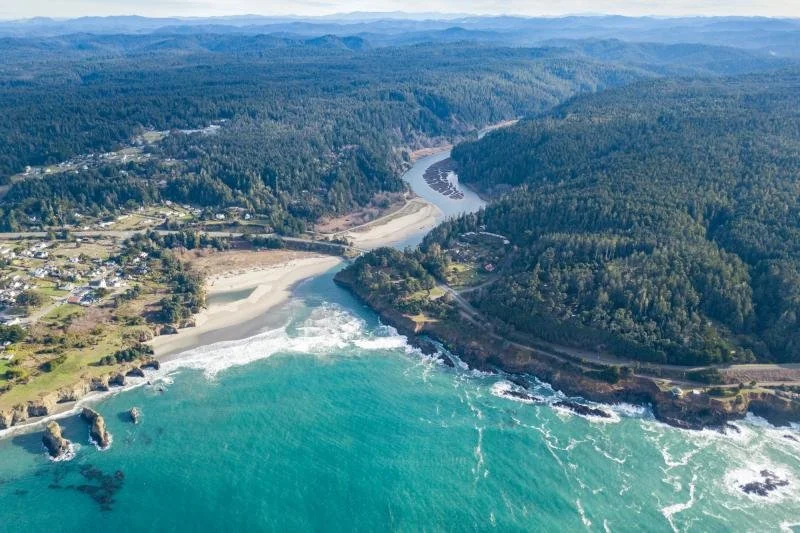
The Big River flows into the Pacific Ocean on the Mendocino Coast. NOAA has funded numerous restoration projects on the Big River to benefit Central California Coast coho salmon. Credit: Adobe Stock
PCI's Commitment
At PCI, we're proud to have contributed our ecological expertise to this collaborative success story. Our team's scientific approach to restoration design, combined with practical implementation experience, has helped create self-sustaining systems that allow endangered species like the CCC coho to recover and thrive.
We look forward to continuing our partnership with NOAA, conservation organizations, timber companies, and local landowners to build on this momentum, supporting both ecological recovery and community resilience in Northern California.
Links to original NOAA articles: